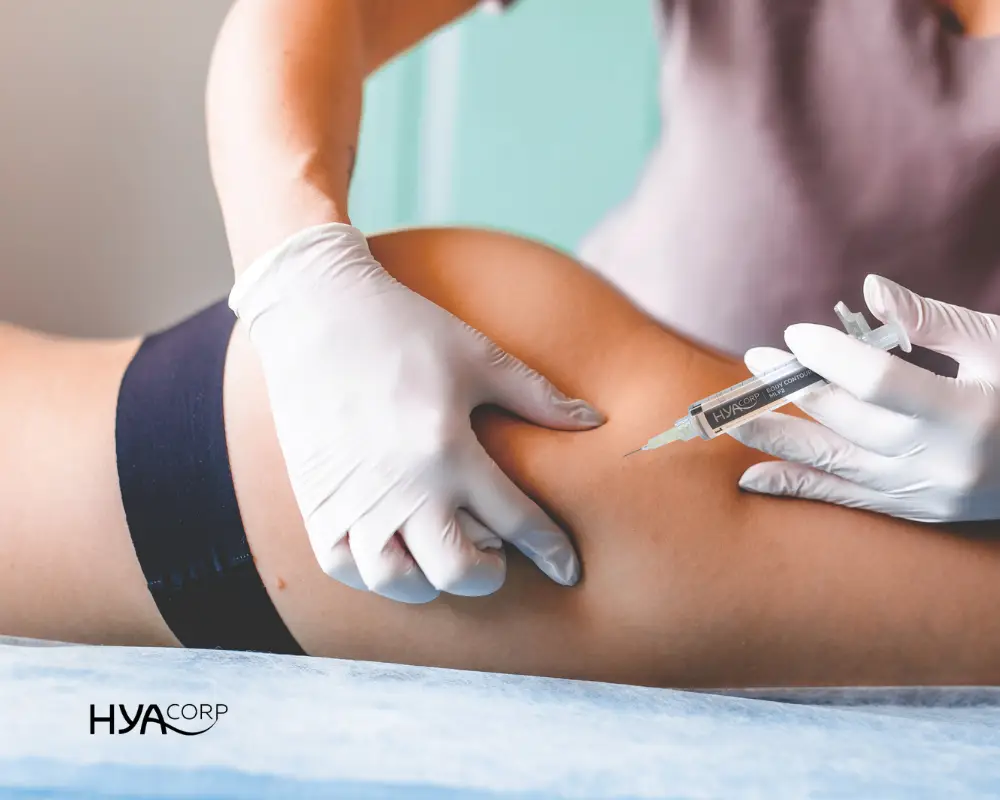



The Era of Stealth Aesthetics
For years, body aesthetics was defined by visibility. Dramatic volume, sharp transitions, and instantly noticeable transformations shaped the industry’s identity. But in 2026, we have entered the era of stealth aesthetics – a movement where the most desirable results are intuitive rather than obvious.1
This shift aligns with the global "Quiet Luxury" trend: refinement replaces excess, and quality is expressed through subtlety. In the context of body contouring, the definition of success has moved away from "augmentation" toward silhouette harmonization. It is no longer about the quantity of volume added, but the architectural precision of its placement. The goal is a form that remains natural not only in a static "before and after" photo but in the fluid, unposed reality of dynamic motion.
From Transformation to Harmonization: The 2026 Philosophy
The modern patient approaches aesthetic treatments with a "long-game" mindset. Rather than seeking a total identity shift, there is a growing preference for targeted body “tweakments”. These small, precise refinements create a profound impact on the overall silhouette by addressing the "connective flow" of the body.2
The human eye does not perceive the body in isolated segments; it experiences it as a continuous, three-dimensional form. The transition between the waist and the lateral hip, or the sweep from the lower back into the gluteal curve, defines the perceived "balance" of the figure. When these transitions are smooth, the silhouette looks effortless. In 2026, the practitioner’s role has evolved into that of a body architect, using specialized materials to build "sub-dermal scaffolding" that respects the patient's natural identity while perfecting their proportions.1
The Science of Rheology: Why HYAcorp Dominates the Body Market
Achieving "Quiet Luxury" results in the body requires a level of engineering that far exceeds standard hyaluronic acid (HA) formulations. While facial fillers are highly effective for the delicate, low-pressure environment of the dermis, the body presents a much more demanding landscape. Regions like the hips and glutes are high-stress environments characterized by dense subcutaneous tissue, constant muscle contraction, and significant gravitational force.
To navigate these challenges, it is essential to move beyond the "one-size-fits-all" approach to HA. Practitioners must recognize that body fillers and facial fillers are fundamentally different in their molecular design. Using a product specifically engineered for the body’s unique anatomical depth and mechanical load is the only way to ensure structural integrity and prevent issues like product migration or rapid degradation.3
HYAcorp body fillers address these specific needs through a scientific foundation of Advanced Thixotropic Technology (ATT) and a biphasic structure:
1. The Biphasic Advantage
HYAcorp is a pioneer in biphasic technology, consisting of highly cross-linked HA particles (up to 500 µm in MLF2) suspended in a non-cross-linked HA carrier. Unlike monophasic gels, which can sometimes spread too thinly or "flatten" under pressure, this biphasic nature ensures the product maintains its projective capacity. It acts as a stable substitute for lost fat or bone structure, providing the robust lift needed for high-impact areas.
2. Thixotropic Behavior and G' (G-prime)
A critical factor in 2026 body contouring is viscoelasticity. HYAcorp gels exhibit thixotropic behavior and high G’:
- Advanced Thixotropic Technology: this technology ensures that under the high pressure of the injection (inside the cannula), the gel becomes more fluid to ensure a smooth, even delivery. Once the pressure is released (inside the tissue), it immediately returns to its original, robust viscosity.
- High G' (Elasticity): A measure of the gel's "hardness" and ability to resist deformation. A high G' ensures that the "lift" achieved in the clinic doesn't bottom out when the patient sits or moves.
Precision Tools: HYAcorp MLF1 vs. MLF2
To achieve a three-dimensional, natural result, practitioners often utilize a layered injection strategy, selecting the specific rheology that matches the anatomical layer.
- HYAcorp MLF1 (Precision & Resurfacing): With a smaller particle size (200-350 μm), MLF1 is designed for precision. It is the gold standard for small-volume restorations such as the hands, calves, or smoothing out superficial skin irregularities and "trochanteric dimpling" or “hip dips”.
- HYAcorp MLF2 (The Structural Foundation): As the "heavy lifter" of the portfolio, MLF2 is used for structural volume. It is the primary tool for correcting deep depressions and providing gluteal projection. Its high cross-linking density ensures it provides a stable foundation that can last up to 24 months.
Anatomical Masterclass: Correcting the "Hip Dip"
The correction of trochanteric depressions (hip dips) is the ultimate test of "Balance over Size". Hip dips are a natural anatomical gap between the pelvis and the femur. In 2026, the goal isn't to create exaggerated width, but to restore visual flow.
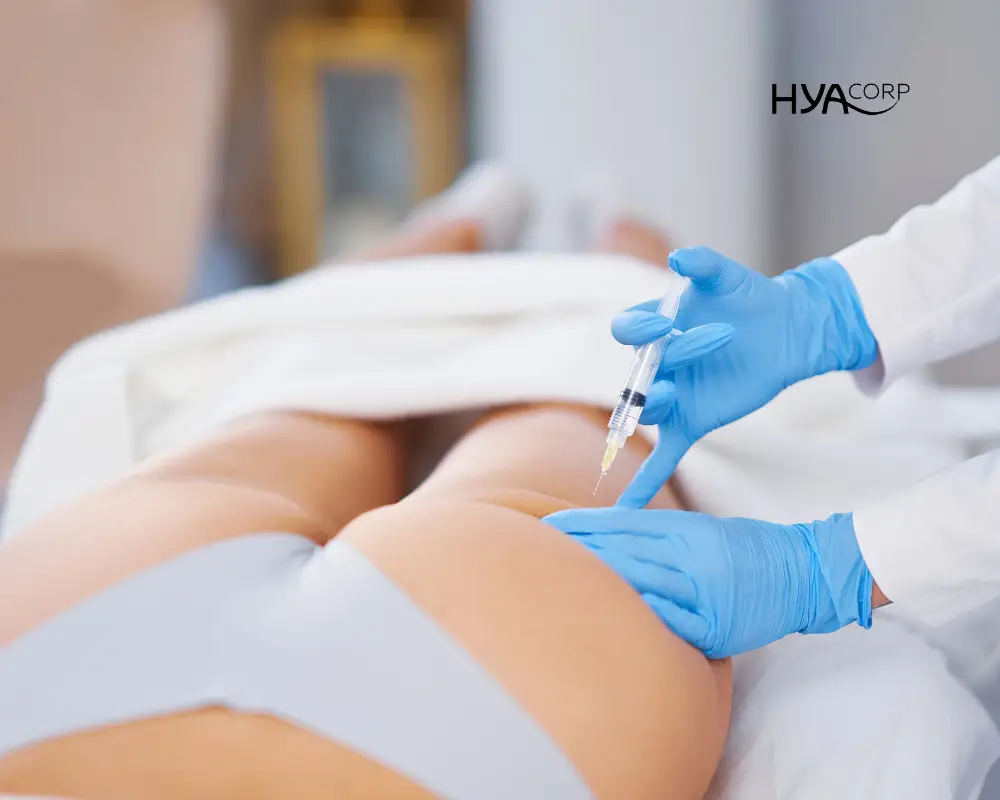
Using targeted placement within the subcutaneous plane, practitioners create an internal "bridge." This technique enhances the natural contour without overcorrecting it, ensuring the line from the waist to the thigh is continuous and athletic.
The "Fit-Patient" Solution: The Only Choice for Athletic Bodies
One of the most significant shifts in 2026 is the rise of the "Athletic Body" aesthetic. Many of today’s patients are highly active and have low body-fat percentages. This makes them poor candidates for a traditional surgical BBL (fat transfer), as they lack the "donor fat" required for the procedure.
HYAcorp offers a metabolic-neutral solution. Unlike fat, which is a living tissue that grows or shrinks with the patient’s diet and exercise, hyaluronic acid fillers remain stable. For the fitness-focused individual, this means they can maintain their lean physique while using HYAcorp to "tweak" the proportions that genetics or training cannot change.
Post-Treatment Excellence
A non-surgical procedure does not mean "no responsibility." Achieving a "Quiet Luxury" result depends as much on the patient’s post-treatment discipline as it does on the practitioner’s skill. To ensure the biphasic gel integrates perfectly with the surrounding tissue and maintains its intended shape, a specific aftercare protocol must be followed.
- Activity & Thermal Regulation
While there is no surgical downtime, the body needs a "quiet period" to stabilize the internal volume.
- Exercise Restrictions: Avoid high-impact activities, heavy lifting, or "G-force" workouts (like squats or cycling) for at least one week. These movements can cause the filler to shift before it has fully integrated into the subcutaneous matrix.
- Heat Exposure: Stay away from saunas, steam rooms, and hot baths for the first week. Elevated body temperatures can increase localized swelling and interfere with the initial settling of the hyaluronic acid.
- Practitioner-Led Optimization
While HYAcorp is designed to be low-maintenance, many leading practitioners suggest a few simple lifestyle adjustments during the first 72 hours to further refine the aesthetic outcome.
Depending on the individual treatment area and the volume injected, some specialists may suggest sleeping in a prone position (on the stomach) or avoiding prolonged, direct pressure on the treated zone to maintain the crispness of the newly sculpted silhouette. Similarly, maintaining optimal hydration can support the hydrophilic nature of the hyaluronic acid, helping the filler achieve its most supple, natural-looking volume.
Ultimately, because no two bodies are the same, the most effective results come from a personalized recovery plan provided by your certified doctor.
Conclusion
True aesthetic success in 2026 is no longer measured by the volume added, but by the confidence restored. When a silhouette is in harmony, it simply feels right. By prioritizing balance over sheer size, we move away from the "disposable" beauty trends of the past and toward a sustainable, personalized era of stealth aesthetics. This is the ultimate signature of a modern practitioner: a result so seamlessly integrated into the patient’s lifestyle and movement that it becomes indistinguishable from nature itself.
As the industry pivots toward this sophisticated standard of "Quiet Luxury," the choice of structural support becomes the defining factor in clinical excellence. If you are ready to refine your approach to body contouring and offer your patients the next generation of architectural body fillers, we are here to support your journey. Contact us to explore the HYAcorp professional portfolio or to know more about how you can integrate these advanced restorative techniques into your practice.
REFERENCES
- Willson A. Looking into the future: Plastic surgery trends for 2026. American Society of Plastic Surgeons. Published December 29, 2025. Accessed March 27, 2026. Available at: https://www.plasticsurgery.org/news/articles/looking-into-the-future-plastic-surgery-trends-for-2026#:~:text=%22This%20philosophy%20defines%20the%20incoming,not%20simply%20turning%20back%20time.
- Chang JH. The Subtle Lift: Enhancing Beauty with Small Filler Adjustments. Modern Aesthetic Institute. Accessed March 27, 2026. Available at: https://modernaesthetic.institute/blog/the-subtle-lift-how-small-adjustments-with-fillers-can-make-a-big-difference/#:~:text=In%202025%2C%20the%20aesthetic%20landscape,fantastic%20without%20identifying%20what%20changed.
- Fontenete S, Alfertshofer M. Rheological and Physicochemical Properties of Hyaluronic Acid Fillers for Body Contouring: Clinical Implications and Anatomical Considerations. J Cosmet Dermatol. 2026 Feb;25(2):e70553.
Smart FAQs
1. What are "hip dips" and can they be corrected without surgery?
Anatomically known as trochanteric depressions, hip dips are the natural indentations found between the iliac crest (hip bone) and the greater trochanter (top of the femur). While they are a normal part of skeletal structure, they can be harmonized using non-surgical silhouette enhancement. HYAcorp fillers act as a sub-dermal scaffold, bridging this gap to create a smoother, continuous transition from the waist to the thigh without the downtime of a fat transfer or BBL.
2. What is Advanced Thixotropic Technology (ATT)?
Advanced Thixotropic Technology (ATT) is a specialized rheological property of HYAcorp fillers. It allows the high-viscosity gel to become more fluid under the mechanical pressure of the injection, ensuring a smooth and precise delivery through a fine cannula. Once the pressure is released and the gel is placed in the tissue, it immediately regains its original stable structure and high G' (G-prime), providing superior lift and resistance to displacement.
3. How long do HYAcorp body filler results last?
Thanks to the highly cross-linked, large-particle biphasic structure of the gel, HYAcorp results typically last up to 18 months. Because hyaluronic acid is a bio-identical substance, it degrades naturally and safely over time. Many patients opt for subtle "maintenance tweaks" to preserve their sculpted silhouette and skin quality.
4. Is HYAcorp safe and biocompatible?
Yes. HYAcorp is an exceptionally safe, non-animal origin hyaluronic acid filler. It is highly biocompatible and designed to integrate smoothly with the body’s own dermal matrix. Because it is metabolic-neutral and of high purity, the risk of inflammatory response is significantly minimized, making it a reliable choice for large-volume body contouring.
5. Does the procedure require general anesthesia or downtime?
No. One of the primary advantages of HYAcorp is that it is a minimally invasive procedure. Only a local anesthetic is used at the entry points, meaning the patient remains awake and comfortable throughout. There is no general anesthesia required, and most individuals return to their social routines within 48 to 72 hours, following a specific aftercare protocol.
.webp)